
“Stability for tomorrow – courage instead of a wait-and-see attitude”: BBH’s annual conference 2026
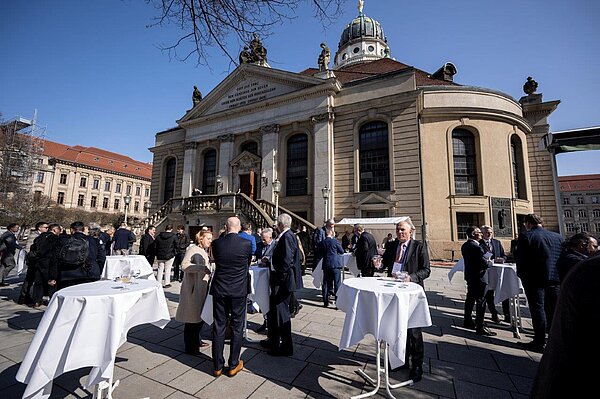
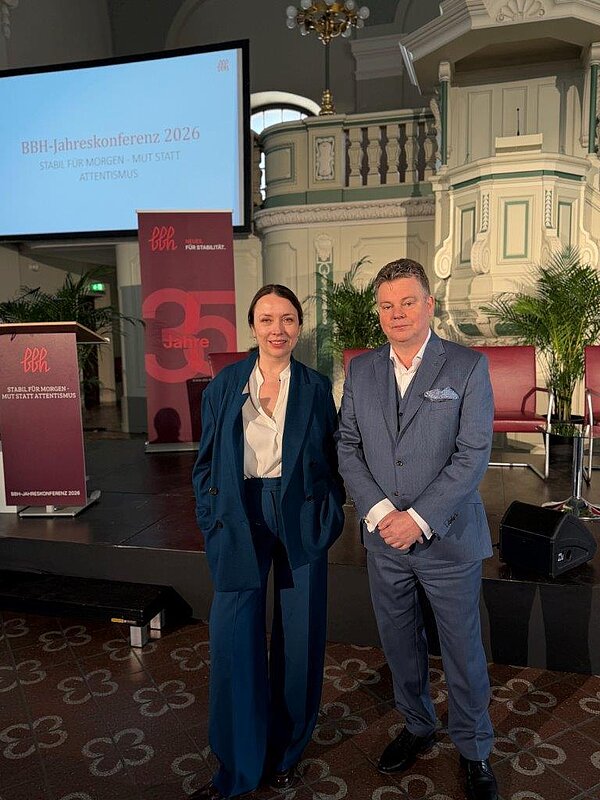
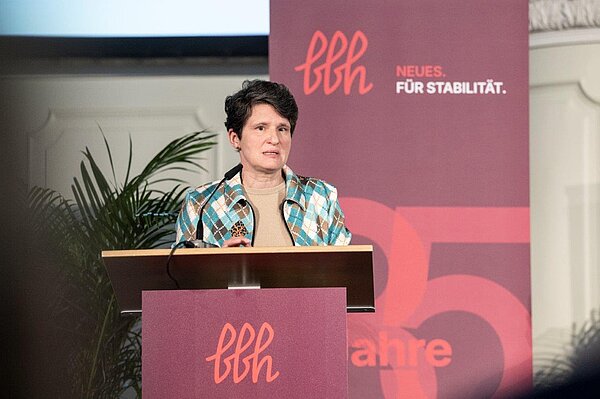
Prof. Dr. Ines Zenke also commended politicians for showing courage rather than adopting a wait-and-see attitude when establishing the special federal fund of Euro 500 billion a year ago. But she also warned: “Money alone does not build bridges, does not lay fibre-optic cables and does not erect wind energy installations. Money needs a reliable regulatory framework, lean processes and – above all – the political will to make it happen.” She stressed that a “summer of action” must follow the many announcements.
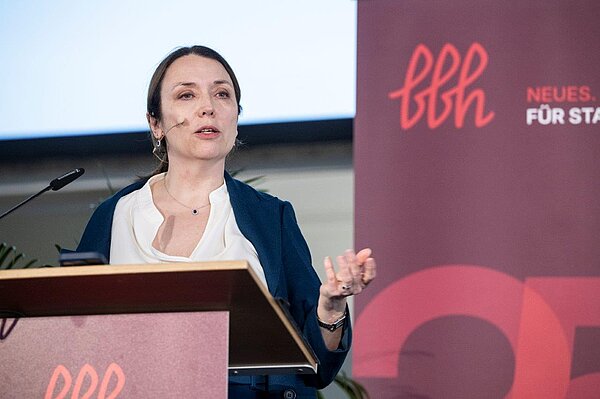
Her remarks set the tone for the conference; the question as to how the special federal fund could be put on the right track needed to be addressed. Which framework conditions are necessary? What impact does the war in the Middle East have on German energy policy? What stage is the transformation at right now?
Christian Seyfert, Director General of VIK, the German Association of Industrial Energy Consumers, delivered the first keynote speech. He warned of a loss of industry in Germany and thus of value added, political stability and, ultimately, the room for manoeuvre for climate protection. However, he also sensed a more realistic approach in energy policy and a willingness to correct the course. In this way – and only in this way – new business models could be developed within the framework of the transformation.
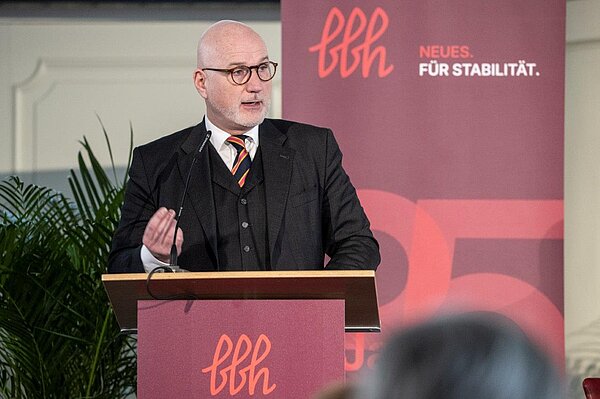
In the second keynote speech of the day, Kerstin Andreae, Chair of the Executive Board of BDEW, the German Association of Energy and Water Industries, shifted the focus to the geopolitical dimension of German energy policy. She stated that the events in the Middle East are likely to have repercussions in Germany. That is why the energy transition need also be considered from the perspective of sovereignty.
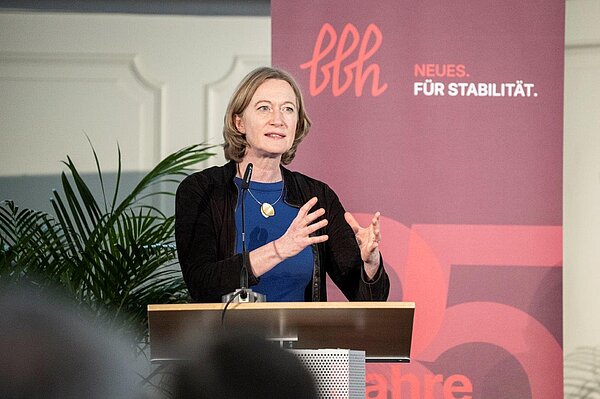
The ensuing panel discussion delved further into the issues raised in the keynotes, focusing on possible courses of actions from both a political and business perspective.
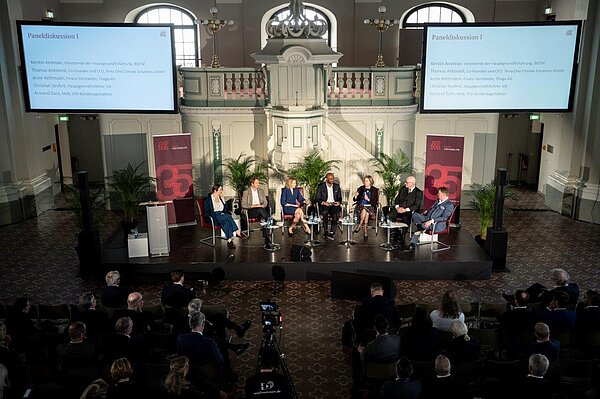
Kerstin Andreae called for action in light of the geopolitical risks and advised against blanket allocation mechanisms to cap energy prices and ensure security of supply. In her view, grid expansion and a rapid ramp-up of the hydrogen market are the order of the day.
Thomas Antonioli, co-founder and CFO of Terra One Climate Solutions GmbH, brought his perspective as a long-standing entrepreneur and founder to the table and called for reliable framework conditions. He said that Germany had long been a beacon of reliability for international investors. He urged the BNetzA, the German Federal Network Agency to set clear and practical requirements, for he currently needs a lawyer for almost everything energy-related that he initiates.
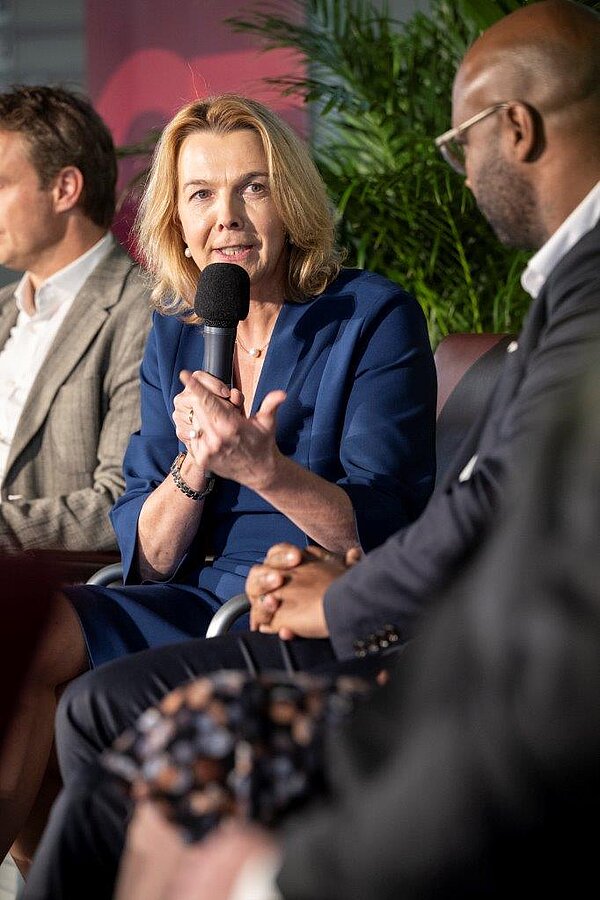
Anne Rethmann, Chairwoman of Thüga AG, also called for fewer rules and regulations. She preferred a clear-cut approach: a special federal fund is a special federal fund and should be treated as additional investment. A special federal fund must not be consumed and thus wasted; it should instead also be used to attract additional private funds.
Christian Seyfert said that he was not particularly anxious about the future, because everything was on the table. Structural change cannot be avoided – the decisive factor is to prevent structural disruptions.
Armand Zorn, Member of the Bundestag and deputy chairman of the SPD parliamentary group, emphasised that Germany as a whole was undergoing transformation. In their energy policy, the coalition government is pursuing a triad of sustainability, security of supply and affordability. Public acceptance must also be part of the equation.
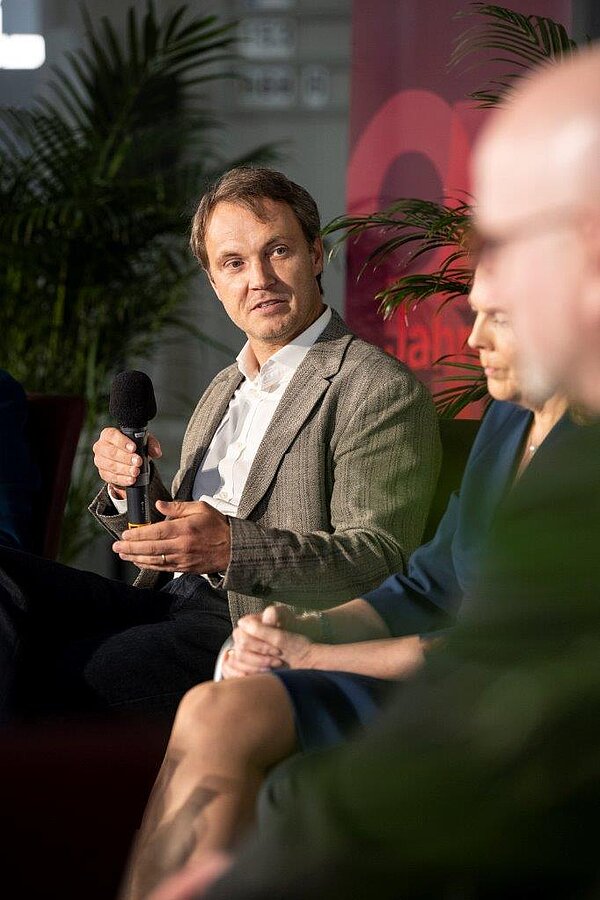
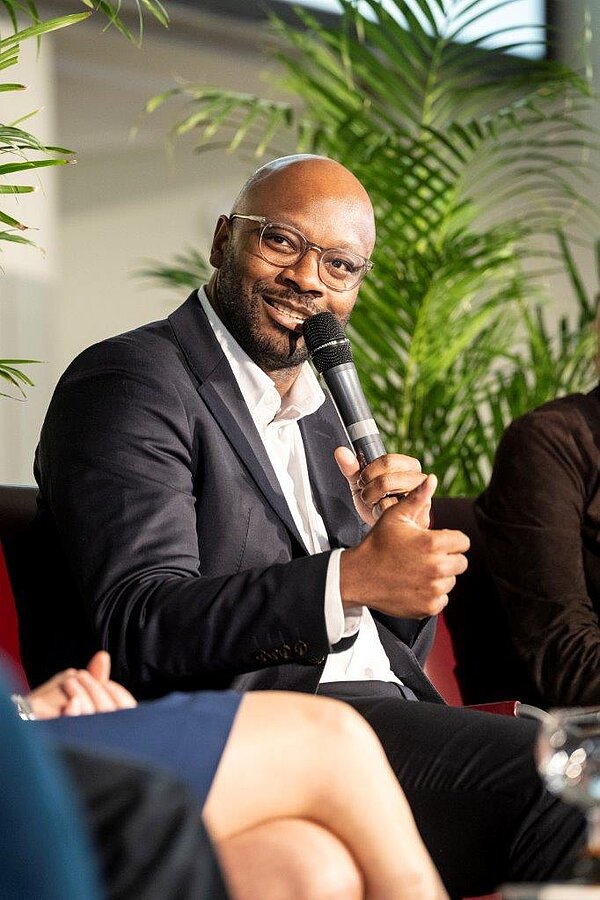
In the discussion round entitled “Think big and be courageous”, co-founder Christopher Burghardt and Prof. Christian Held presented insights into the Sila Atlantik project. Its aim is to generate green electricity in Morocco and transport it to Germany via a 4,800-km submarine power cable. According to Burghardt, the project is technically feasible and enjoys political support.
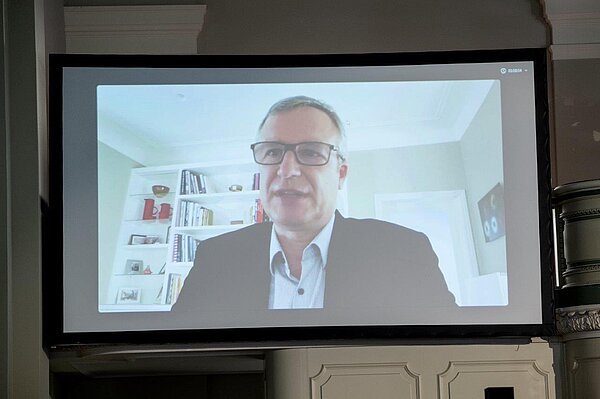
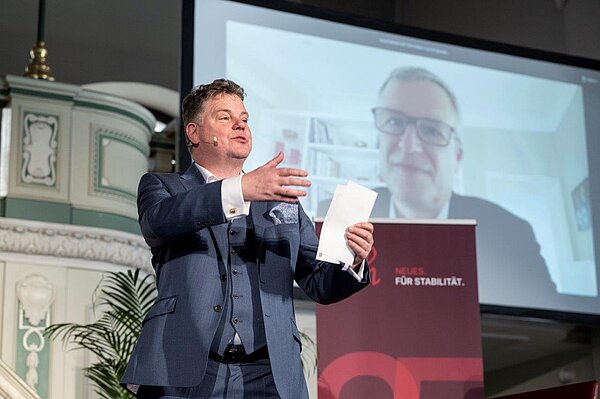
In the third keynote speech of the conference, Michael Lewis, CEO of Uniper SE, called for honesty about the costs and courage to discuss priorities. According to him, energy supply is a geopolitical matter, which is why the system needs to become even more resilient. In a world of multiple crises, energy policy no longer works on a linear basis; we must establish a new form of stability.
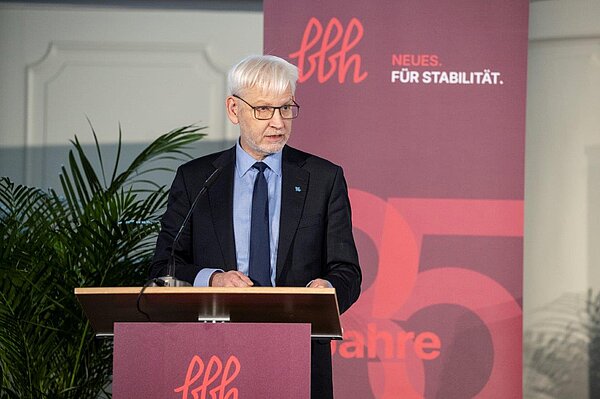
Tanja Görner, Director General of BDI, the Federal Association of German Industries, gave the fourth keynote speech in which she focused on structural reforms. According to her, taking action rather than adopting a wait-and-see attitude would be a good start. Without reforms, progress would be slow and the desired results would not be achieved.
The second panel focused on the structural issues. How should the state, business and society work together during the transformation?
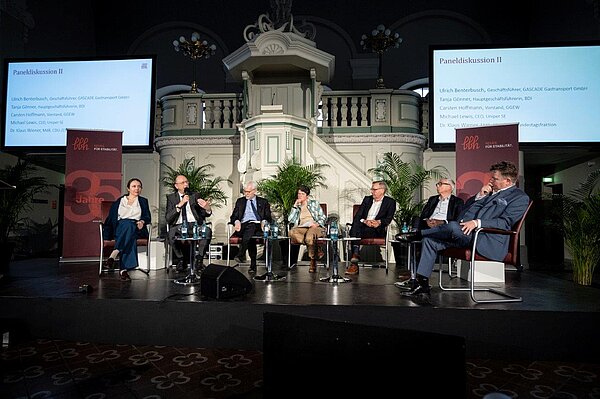
Ulrich Benterbusch, managing director of GASCADE Gastransport GmbH, opened the panel by stating: “A cost-effective energy transition is only possible with hydrogen.” According to him, what matters now is the willingness to take action and introduce reforms; he believes that the public sector should act as a partner in this.
Tanja Gönner concluded that the existing structures were not sufficient to meet the challenges of the transformation. In her opinion, a fundamentally different form of cooperation between the state, business and society is required.
Carsten Hoffmann, CEO of GGEW, Gruppen-Gas- und Elektrizitätswerk Bergstraße AG, once again pointed to the role of the state as a key player in shaping the energy transition and as a shareholder, thereby encouraging and safeguarding investment. In his view, it is not about the businesses being run by the state, but about the understanding of what the energy transition means for the business sector.
Michael Lewis echoed this view and called on the government to establish a clear legal framework, as was done with the Renewable Energy Sources Act (EEG). According to him, the task now is to consistently implement incentives and a clear framework.
Dr. Klaus Wiener, Member of the Bundestag and chair of the CDU/CSU parliamentary group on the Committee on Economic Affairs and Energy, warned that the transformation was not a sprint but a marathon. This would also involve addressing uncomfortable truths and explaining to people that it will not be easy.
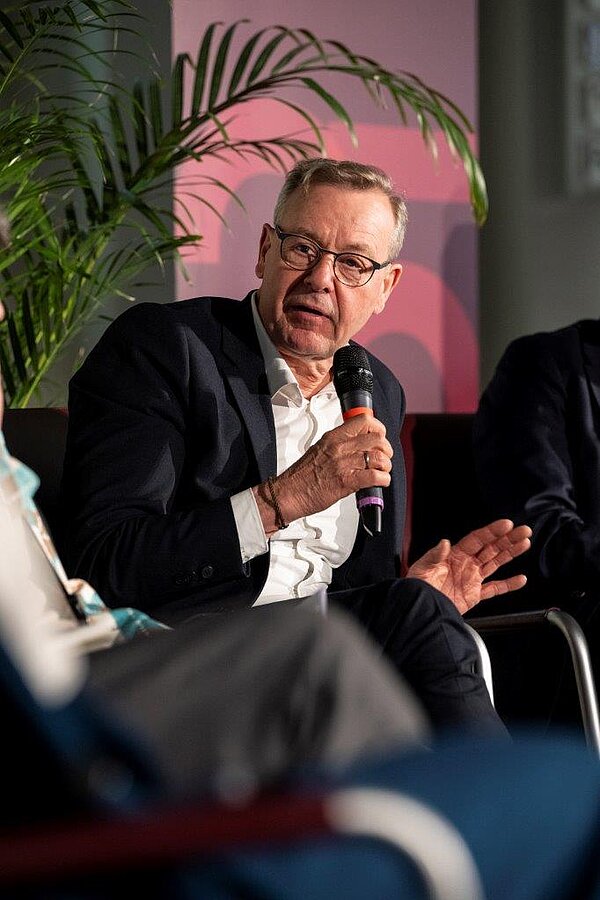
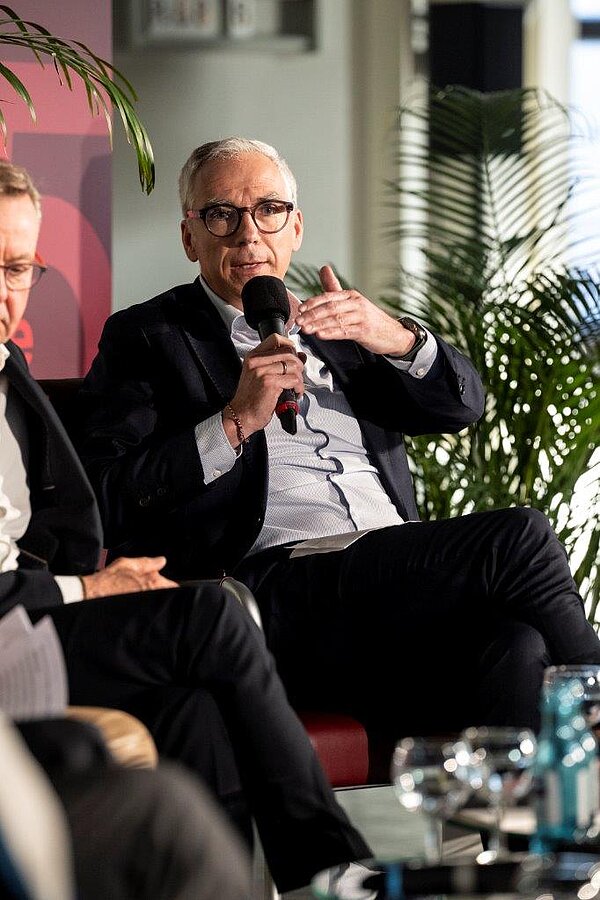
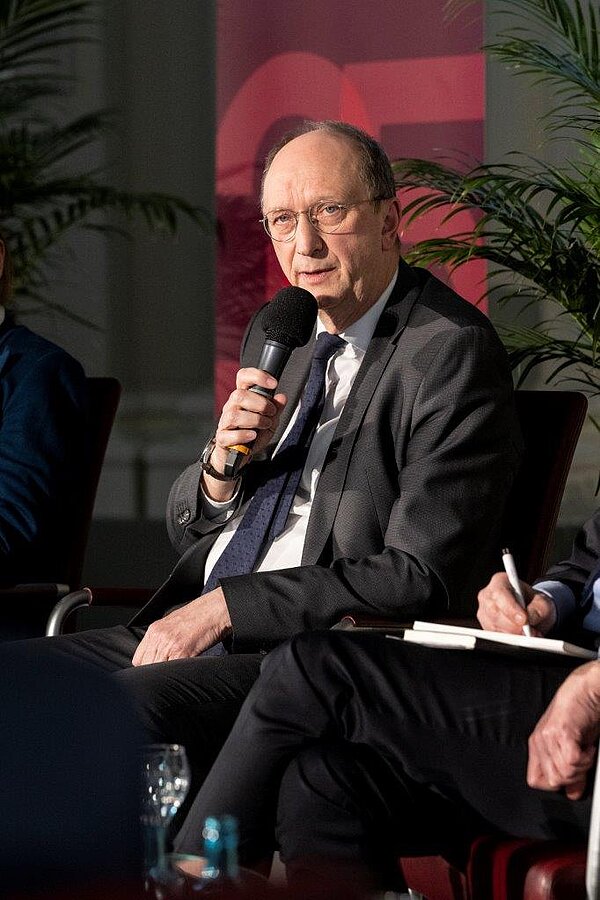
Prof. Christian Held concluded the conference by stating that bold decisions would now have to be taken – in politics, business and society. The BBH annual conference 2026 had made it clear: the tools are on the table, the special fund has been approved and the technologies are in place. He believes that what matters is having the determination to make it happen and the courage to prove it.
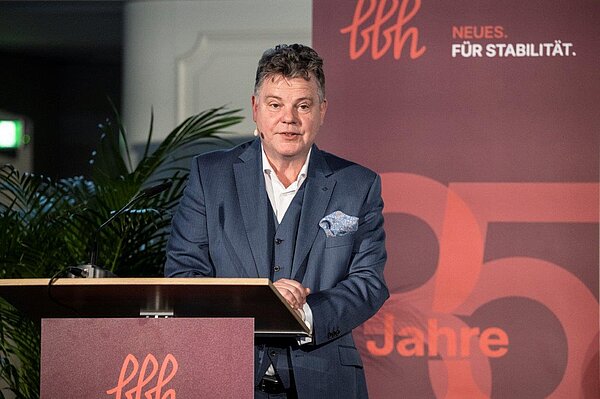
The conference day drew to a close with a reception at BBH’s offices at Magazinstraße, where everyone raised a glass to celebrate the 35th birthday. [BS1] The guests then enjoyed the evening keynote speech held by Stefan Evers, Mayor and Senator for Finance of the State of Berlin.
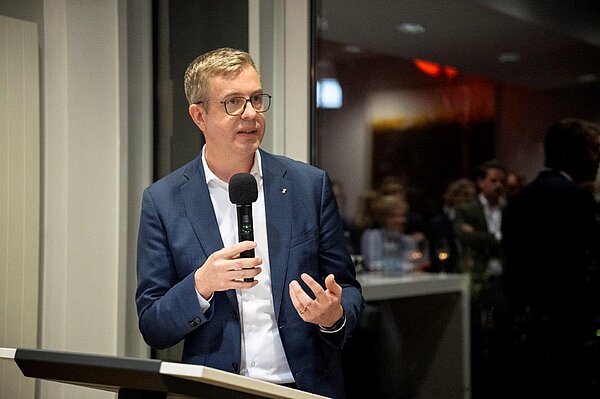
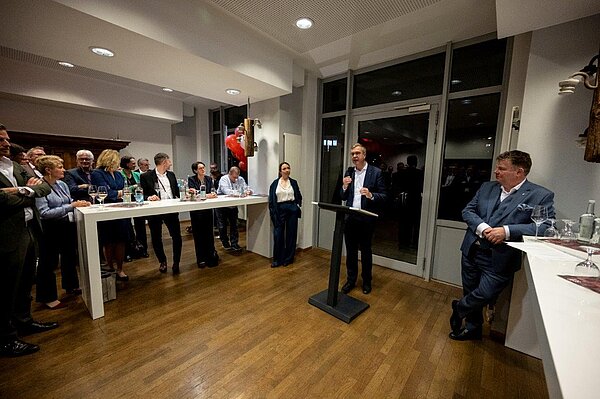
He began with a sober assessment of the situation: at first glance, the outlook seemed bleak. A huge investment backlog had built up over the decades. However, it is now about more than just upgrading the infrastructure; it is also about being prepared for a crisis and building resilience. Infrastructure has long been a matter of security policy. The fact that it now takes longer to plan than to build it is primarily due to administrative processes. He concluded by asking whether we, as a society, were aware that the system needed reforming. He assured the attendees that politicians would play their part.